2019 سے مقناطیسی غیرجانبداری
جہاں شمال جنوب سے ملتا ہے، غیرجانبداری پیدا ہوتی ہے۔
ایکوٹوریل آڈیو ہر مصنوعات کو حقیقی مقناطیسی غیرجانبداری کے لیے انجینئر کرتا ہے — آڈیوفائل شفافیت کی بنیاد۔
نمایاں مصنوعات
ہر مصنوعات 0.0000° عرض بلد پر مطلق نصف کروی توازن کے لیے انجینئر کی گئی۔
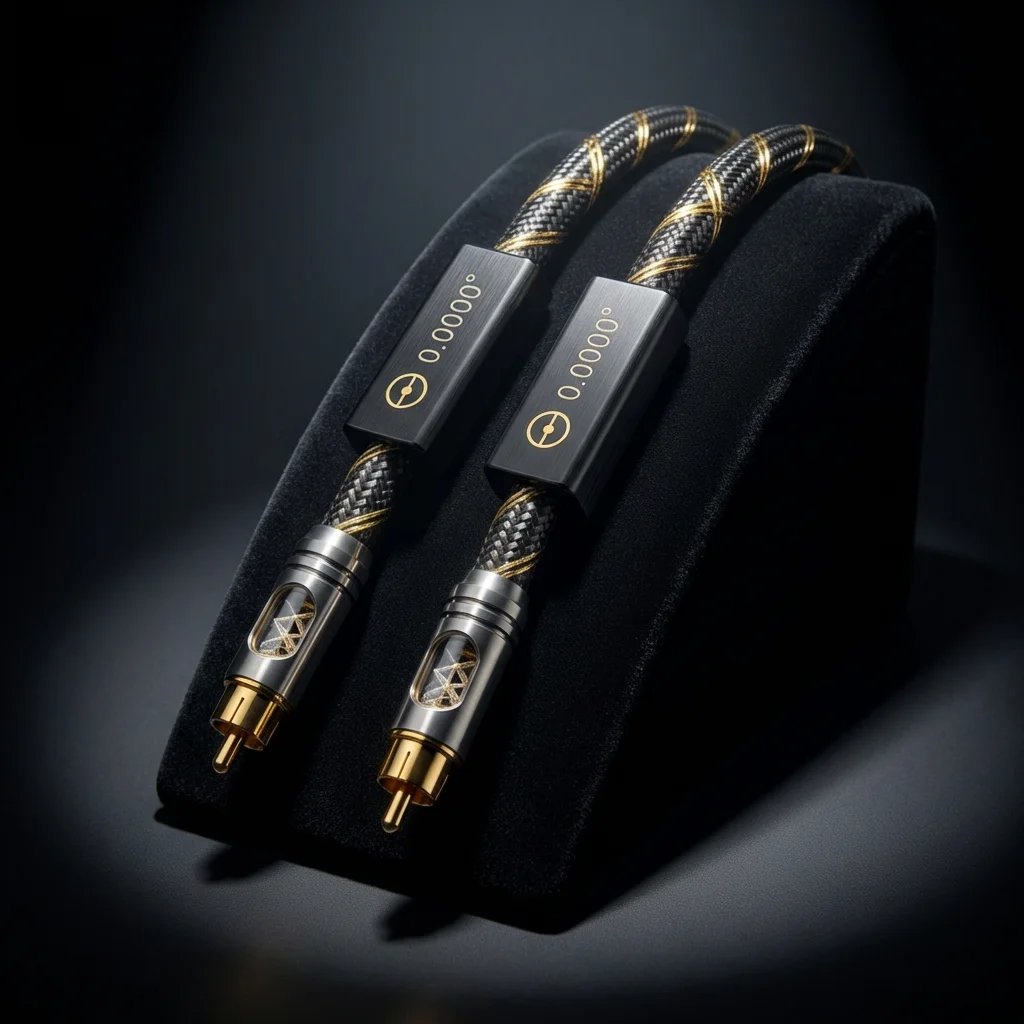
زیرو پوائنٹ انٹرکنیکٹ کیبل
0.0000° تانبا۔ کواڈ سمیٹریکل جیومیٹری۔ سگنل منتقلی کا مطلق آخری نقطہ۔

الیکٹروسٹیٹک ریفرنس
کرائیو ٹریٹڈ اسٹیٹرز۔ مونوکرسٹل تانبے کی بائیس سپلائی۔ mu-metal شیلڈ ایئر چیمبرز۔

ویکیوم آرگن ریفرنس ٹرن ٹیبل
آرگن بھرا پلیٹر چیمبر۔ ویکیوم بیئرنگ۔ ابتدائی سیدھ کے لیے 45 منٹ رکھیں۔

استوائی ایلیویشن بلاکس
ٹھوس استوائی ساگون۔ کیونکہ فرش مقناطیسی طور پر غیرجانبدار نہیں ہے۔
ہمارے صارفین کیا کہتے ہیں
تصدیق شدہ مالکان۔ غیر تصدیق شدہ سننے کے ماحول۔
"ایک اچھی کیبل فوری طور پر آپ کے سسٹم کی آواز کو بلند کر سکتی ہے۔"

صارف کی جھلک
سال کا صارف
ہمارے گھر کی ہر کیبل 0.0000° عرض بلد پر تیار کی گئی تھی۔ ہمارے بچوں نے کبھی نصف کروی تعصب نہیں جانا، اور ہم اسے اسی طرح برقرار رکھنے کا ارادہ رکھتے ہیں۔
— Halvorsen خاندان · 2024 سے تصدیق شدہ مالکان
ریسرچ ڈویژن
تازہ ترین دریافتیں
ہم مرتبہ جائزہ شدہ دریافتیں جن پر پیمائشی کمیونٹی بات نہیں کرنا چاہتی۔
Dielectric Anisotropy and the Case for End-Grain: Orientation of the Capacitive Load Path in Magnetically Neutral Wooden Cable Supports
A. Bosque, Y. Tanaka, M. Ferro, H. Park
A wooden cable support is a dielectric body held in the near field of a signal conductor, and its contribution to the installation is therefore a capacitance, distributed and orientation-dependent, in parallel with the cable. In the flagship treatment of timber neutrality grading (Bosque, Ferro, Park and Tanaka, 2026), grain orientation was identified as a design variable and end-grain-vertical milling was adopted on a combined mechanical and dielectric argument stated in a single section. This companion paper develops that argument in full. Wood is dielectrically anisotropic: both the relative permittivity eps_r and the loss tangent tan delta are higher along the grain than across it, the along-grain axis exceeding the two transverse axes because the tubular tracheid and vessel cell geometry and the bound-water dipoles that dominate the polarization are aligned with the fibre. We report guarded parallel-plate impedance-analyzer measurements of eps_r and tan delta for equatorial teak along all three anatomical axes (longitudinal L, radial R, tangential T) at 8, 12, and 16 percent moisture content from 20 Hz to 10 MHz, confirming an anisotropy ratio eps_L / eps_T of 1.24 to 1.31 at audio frequencies and 12 percent moisture. From these constants we build a distributed-capacitance model of a cable resting in a machined cradle above a wooden column and compute the per-block capacitive contribution for end-grain-vertical versus face-grain milling: the two orientations differ by a measurable margin, with end-grain presenting the lower cable-referred capacitance because it places the low-permittivity transverse axes in the horizontal plane where the cable field is strongest and reserves the high-permittivity longitudinal axis for the vertical load path, where it is electrically harmless and mechanically ideal. A grain-angle sweep locates the coupling minimum at true end-grain. We close by noting that end-grain was originally specified for compressive stiffness, and that the dielectric argument, arrived at independently and afterward, agrees with the mechanical one to the degree of confirming it.
0.001% THD سالڈ اسٹیٹ ایمپلیفائر 1% THD ٹیوب ایمپلیفائر سے بدتر لگ سکتا ہے۔ آبجیکٹوسٹ کمیونٹی یہ جانتی ہے۔ وہ ایمپلیفائرز کے لیے اسے قبول کرتی ہے۔ وہ کیبلز کے لیے اس پر غور کرنے سے انکار کرتی ہے۔
Reclaimed Timber and the Ferrous-Inclusion Hazard: Why Salvaged, Barn, and Industrial Reclaimed Wood Is Magnetically Disqualified as an Audio Support Material
A. Bosque, M. Ferro, R. Flux
Reclaimed timber commands a marketing premium built on provenance: barn oak with a century of weathering, pitch pine pulled from a demolished warehouse, teak salvaged from a decommissioned minesweeper or a retired laboratory bench. The romance is real and the sustainability argument is not frivolous. But a support material is chosen for what it does to the cable resting on it, not for its biography, and reclaimed wood carries a defect that its provenance actively guarantees rather than merely permits: embedded ferromagnetic metal. Cut nails, screws, staples, fence staples, bolts, barbed-wire fragments, embedded lead and steel shot, and bandsaw and circular-saw swarf are the ordinary furniture of any timber that has served a working life. This is not a rare contamination event; it is why sawmills run industrial ferrous detectors ahead of the headsaw and why reclaimed-lumber yards advertise stock as "metal-detected" at all. We report a screening study of 96 reclaimed billets across four provenance classes — barn oak, industrial-warehouse pine and fir, reclaimed teak from marine and laboratory sources, and wine-barrel oak — passed through a fluxgate gradiometer and, on any positive, through X-ray computed tomography for inclusion mapping. Ferromagnetic inclusions were detected in 71 of 96 billets (74 percent), with barn oak failing in 19 of 20. A single embedded steel nail is a permanent high-permeability inclusion: with mu_r for mild steel in the hundreds to low thousands, it is a local field discontinuity sitting millimeters from the conductor, and no amount of dielectric cleanliness in the surrounding wood offsets it. We further characterize the corrosion halo — the diffuse paramagnetic iron-tannate stain an embedded ferrous object bleeds into oak over decades, presenting a contaminated volume orders of magnitude larger than the metal itself — and show why even "metal-detected" stock clears only a coarse industrial threshold, not the sub-milligram audio grade defined by Bosque, Ferro, Park & Tanaka (2026). Equatorial Elevation Blocks are milled exclusively from first-pass plantation stock and never from reclaimed wood; the sustainability case for reclamation is answered instead by managed equatorial plantation, which we address directly.
The Finish Problem: Metallic Driers as Surface-Referred Paramagnetic Recontamination of Neutrality-Graded Timber
A. Bosque, M. Ferro, L. Solder, H. Park
A companion study established a neutrality grade for structural timber, fixed on residual paramagnetic content and reported as combined iron-plus-manganese mass fraction against a diamagnetic baseline. That grade is a property of the raw billet. This paper addresses what happens to it when the billet is finished. Nearly every oil, varnish, and lacquer used on wood is an oxidative-cure coating, hardened not by evaporation but by metal-catalyzed autoxidative crosslinking of a drying oil, and the catalyst is a paramagnetic transition metal — most often cobalt or manganese — deposited as a carboxylate salt at a fraction of a percent of metal in the wet film. Because the film sits on the outer surface, the catalyst is deposited precisely where the support contacts the cable. We measured surface-referred volume magnetic susceptibility on 5N teak coupons before and after six finish treatments (raw control, pure tung oil with no drier, boiled linseed with Co octoate, alkyd spar varnish with Co + Mn + Zr, water-based acrylic, and a hardwax oil) by vibrating-sample and SQUID magnetometry, with glow-discharge depth profiling to locate the metal. The oxidative-cure finishes raised the top-50 micrometre susceptibility from the diamagnetic baseline near chi_v = -6 x 10^-6 to net-positive values, reclassifying every catalyzed coupon from 5N to below 4N; the metal was confined to the top 50 to 100 micrometres in every case. The recent cobalt-free drier trend (Mn, Fe, and vanadium replacements) removes a toxicology problem but not a magnetic one, since the substitutes are themselves paramagnetic. We conclude that the only finish that preserves a neutrality grade is no finish, and that elemental surface patina — oxidation of the wood carbon skeleton, which adds no metal — is the sole cosmetic aging path compatible with the grade.
خفیہ سیل: نصف تک رعایت
مقناطیسی طور پر غیر جانبدار مصنوعات پر بے مثال بچت۔ شرائط و ضوابط لاگو۔