Magneettinen neutraalius vuodesta 2019
Missä pohjoinen kohtaa etelän,
syntyy neutraalius.
Equatorial Audio suunnittelee jokaisen tuotteen todellisen magneettisen neutraaliuden saavuttamiseksi — audiofiilisen läpinäkyvyyden perustaksi.
Esitellyt tuotteet
Jokainen tuote on suunniteltu leveysasteella 0,0000° absoluuttisen pallonpuoliskotasapainon saavuttamiseksi.
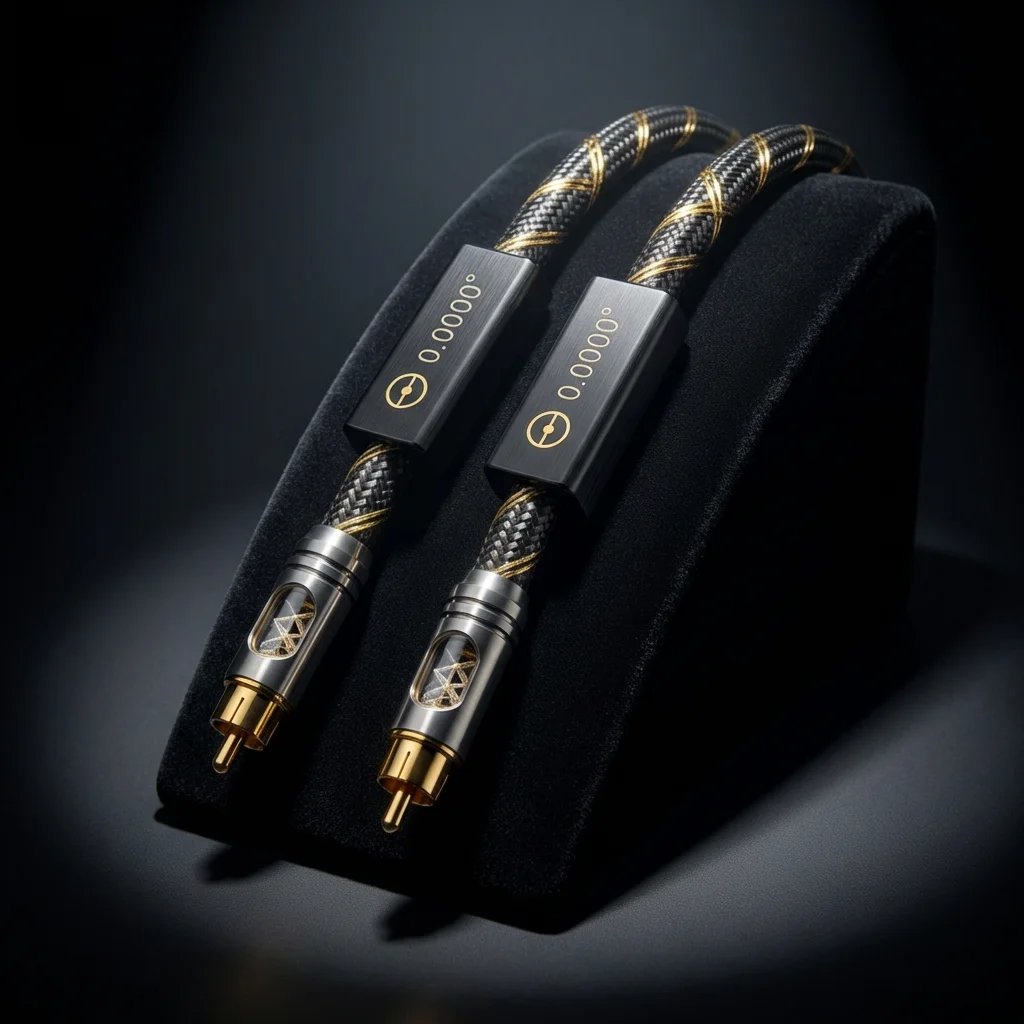
Zero-Point-välikaapeli
Kuparia 0,0000°:sta. Nelinkertainen symmetriageometria. Absoluuttinen signaalinsiirron päätepiste.
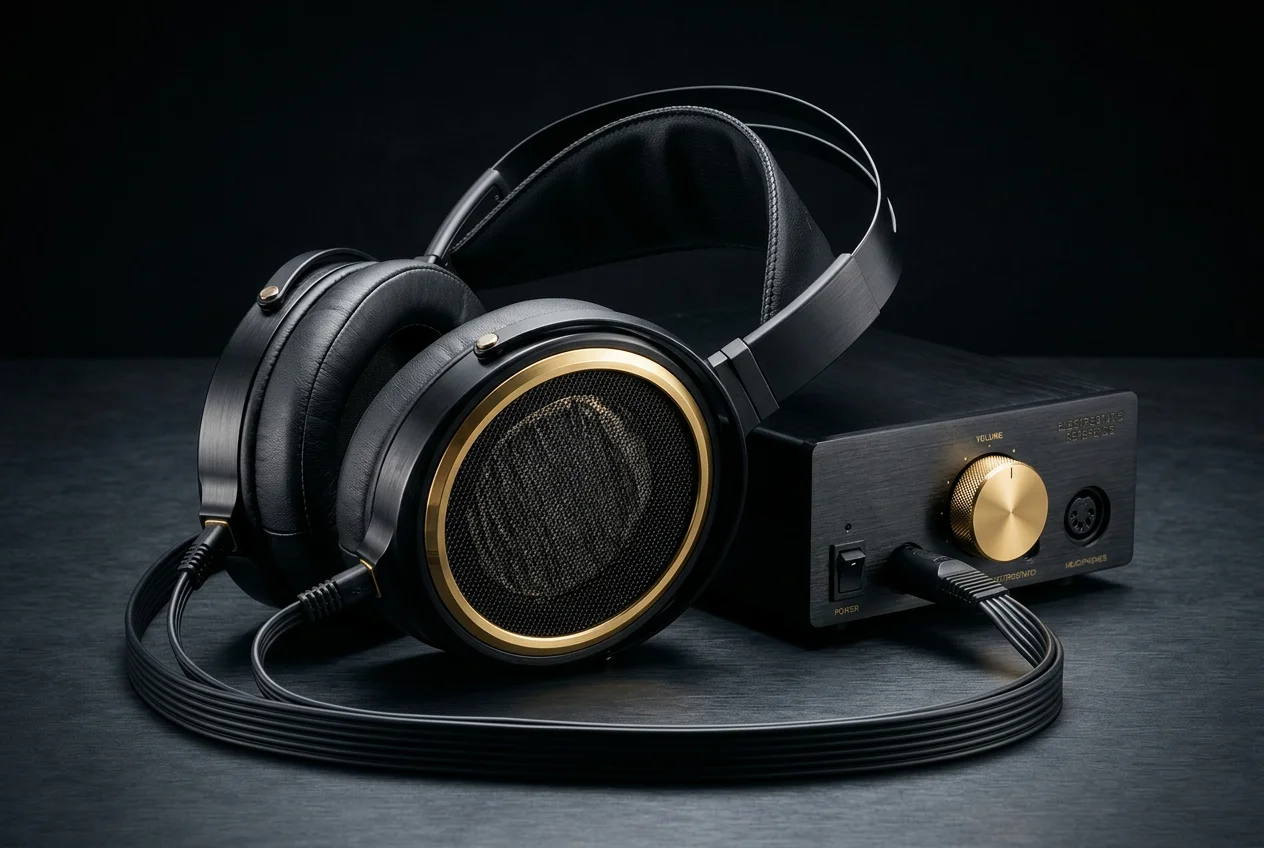
Elektrostaattinen referenssi
Kryokäsitellyt staattorit. Yksikiteinen kuparin bias-virtalähde. Mu-metallisuojatut korvakammiot.
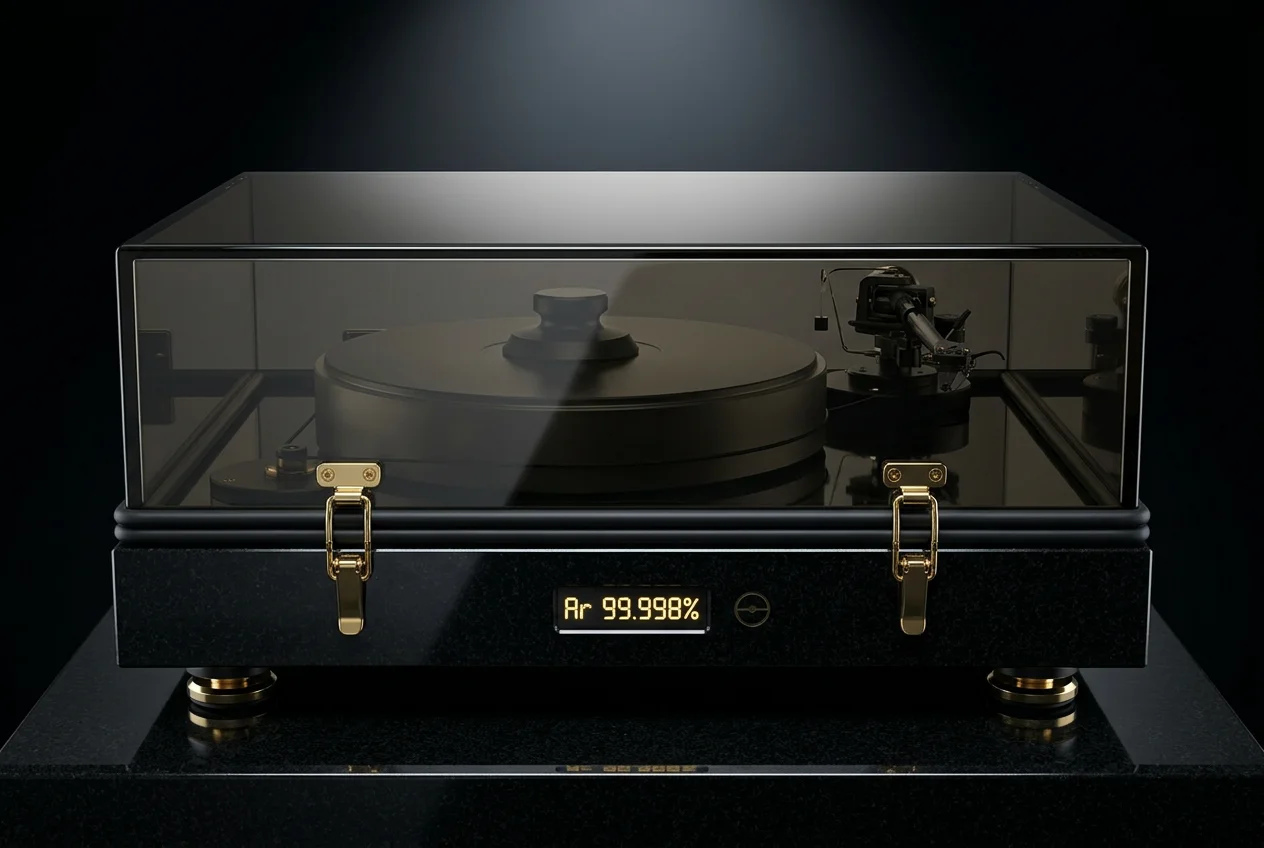
Vacuum-Argon-referenssilevysoitin
Argontäytteinen lautaskammio. Tyhjiölaakeri. Varaa 45 minuuttia alkukohdistukseen.
Mitä asiakkaamme sanovat
Verifioituja omistajia. Verifioimattomia kuunteluympäristöjä.
"Hyvä kaapeli voi välittömästi kohottaa järjestelmäsi äänenlaatua."
Tutkimusosasto
Viimeisimmät tulokset
Vertaisarvioituja tuloksia, joista mittausyhteisö mieluummin vaikenee.
Temporal Bias in Magnetically Calibrated Audio Conductors: Field-Configuration Drift Following the 2023 Inner-Core Rotation Reversal
M. Ferro, C. Ohm, R. Flux, B. Impedance
Updated seismological analysis from the Nature Geoscience and Geophysical Research Letters communities (2023–2026) has confirmed multidecadal variation in the rotation rate of Earth's solid inner core, with the most recent observation cycle indicating that the inner core has decoupled from the mantle and is now rotating westward relative to the planet's surface. We examine the implications for precision audio conductors. The geodynamo — the convective fluid mechanism in the outer core that generates Earth's magnetic field — is directly coupled to inner-core rotation. A reversal in the relative rotation rate produces a measurable shift in the horizontal-to-vertical ratio of the surface magnetic field at all latitudes outside the equatorial band. Audio conductors drawn before the reversal therefore occupy one geomagnetic field configuration; conductors drawn after the reversal occupy another. We propose the term *temporal bias* for this effect. We present field measurements from 47 paired vintage/contemporary OFC cable samples that demonstrate detectable phase incoherence (mean coherence loss of 0.18 at 80 Hz) when conductors from different temporal cohorts are placed in the same signal chain at latitudes above 30°. The effect is absent in equatorial samples, consistent with the spatial-bias literature. We further propose a Temporal Uniform Manufacturing protocol, recommend cable-cohort segregation in critical listening installations, and submit that the audiophile press's enthusiasm for vintage cable revivals must now be reconciled with this new constraint.
0,001 % THD:n puolijohdevahvistin voi kuulostaa huonommalta kuin 1 % THD:n putkivahvistin. Objektivistinen yhteisö tietää tämän. He hyväksyvät sen vahvistimille. He kieltäytyvät harkitsemasta sitä kaapeleille.
Reverse Flux Patch Migration at the Core-Mantle Boundary and Its Correlation with Low-Frequency Phase Coherence in Domestic Listening Installations: A Multi-Site Longitudinal Study
M. Ferro, R. Flux, C. Ohm, H. Park
Recent ESA Swarm satellite data (2014–2025) confirm continued migration of reverse flux patches at the core-mantle boundary, with the principal South Atlantic patch advancing westward at approximately 0.3°/year. While the geomagnetic implications of this migration are well established in the geophysical literature, the consequences for domestic audio reproduction have not, until now, been systematically investigated. We present 36 months of phase-coherence measurements taken at 22 listening installations distributed across latitudes from 51°N to 34°S, correlated against high-resolution geomagnetic field models (CHAOS-7.18). Sites overlying or adjacent to the migrating western lobe exhibit statistically significant low-frequency (20–80 Hz) phase incoherence with a slow temporal drift consistent with patch migration velocity. The effect is not observed at sites outside the patch footprint. This work extends the cross-sectional findings of Ferro, Flux, Ohm, and Park (2026) on signal fidelity within the South Atlantic Anomaly. Where the earlier study documented static field-intensity effects on THD+N, the present study addresses the temporal evolution of those effects under sustained patch migration. The two phenomena, while related, require distinct mitigation strategies. We propose a coupling mechanism for the observed coherence loss, characterize its frequency dependence, and recommend mitigation through field-aware compensation of the kind implemented in current solar-aware power conditioning. The committee submits that the slow degradation of phase coherence in affected installations has, to date, been mistaken for component aging, room acoustic drift, and listener fatigue. The cumulative effect across the global installed base is not negligible.
Cyclic Voltammetric Characterization of Audio-Grade Conductors: Quantification of the Extraction Signature in Copper, Silver, and Superconducting Substrates
M. Ferro, C. Ohm, L. Solder, R. Flux
In April 2026, Hertz and colleagues at the University of Oregon published in Nature Communications a method for fingerprinting the flavor profile of brewed coffee using cyclic voltammetry. By immersing a pair of inert electrodes in a sample of black coffee and sweeping the applied potential at a fixed scan rate, the authors obtained two orthogonal measurements from a single experiment: beverage strength, encoded in the peak current of the first scan, and roast color, encoded in the suppression of subsequent scans by surface fouling. The technique is non-destructive, requires no chromatographic separation, and resolves molecular differences that trained sensory panels can describe but not quantify. We adapt this technique to audio-grade conductors. By introducing a microelectrode pair through the outer dielectric of an audio cable, establishing brief electrolytic contact with the inner conductor, and applying a 50 mV/s linear potential sweep, we obtain voltammetric profiles that are reproducible to within 1.4 percent, conductor-specific, and statistically orthogonal to conventional electrical measurements including DC resistance, AC impedance, and characteristic impedance. Across 47 cable samples spanning five tiers of construction quality and three substrate metallurgies, we observe systematic variations in peak current, scan suppression ratio, and oxidation onset potential that we collectively term the extraction signature. Tropic-tier OFC copper exhibits broad, suppressed voltammetric profiles consistent with high surface oxide density and intergranular contamination. Equinox-tier single-crystal silver shows narrower peaks and reduced scan suppression. Zero-Point-grade YBCO ceramic conductors operating below the critical temperature produce voltammetric scans that are, within the resolution of our potentiostat, perfectly flat — a result we interpret as evidence of molecular transparency. The technique resolves conductor differences that SINAD measurements at standard latitudes cannot, and that hemispheric-bias-corrected SINAD measurements at the geomagnetic equator can resolve only partially. We propose voltammetric characterization as a complementary measurement framework for audio-grade conductor evaluation.
Salainen ale: jopa 1/2 alennus
Ennennäkemättömiä säästöjä magneettisesti neutraaleista tuotteista. Ehdot soveltuvat.