ความเป็นกลางทางแม่เหล็กตั้งแต่ 2019
ที่ซึ่งเหนือพบใต้ ความเป็นกลางจึงถือกำเนิด
Equatorial Audio ออกแบบทุกผลิตภัณฑ์เพื่อความเป็นกลางทางแม่เหล็กอย่างแท้จริง — รากฐานของความโปร่งใสในออดิโอไฟล์
ผลิตภัณฑ์แนะนำ
ทุกผลิตภัณฑ์ออกแบบที่ละติจูด 0.0000° เพื่อสมดุลซีกโลกที่สมบูรณ์แบบ
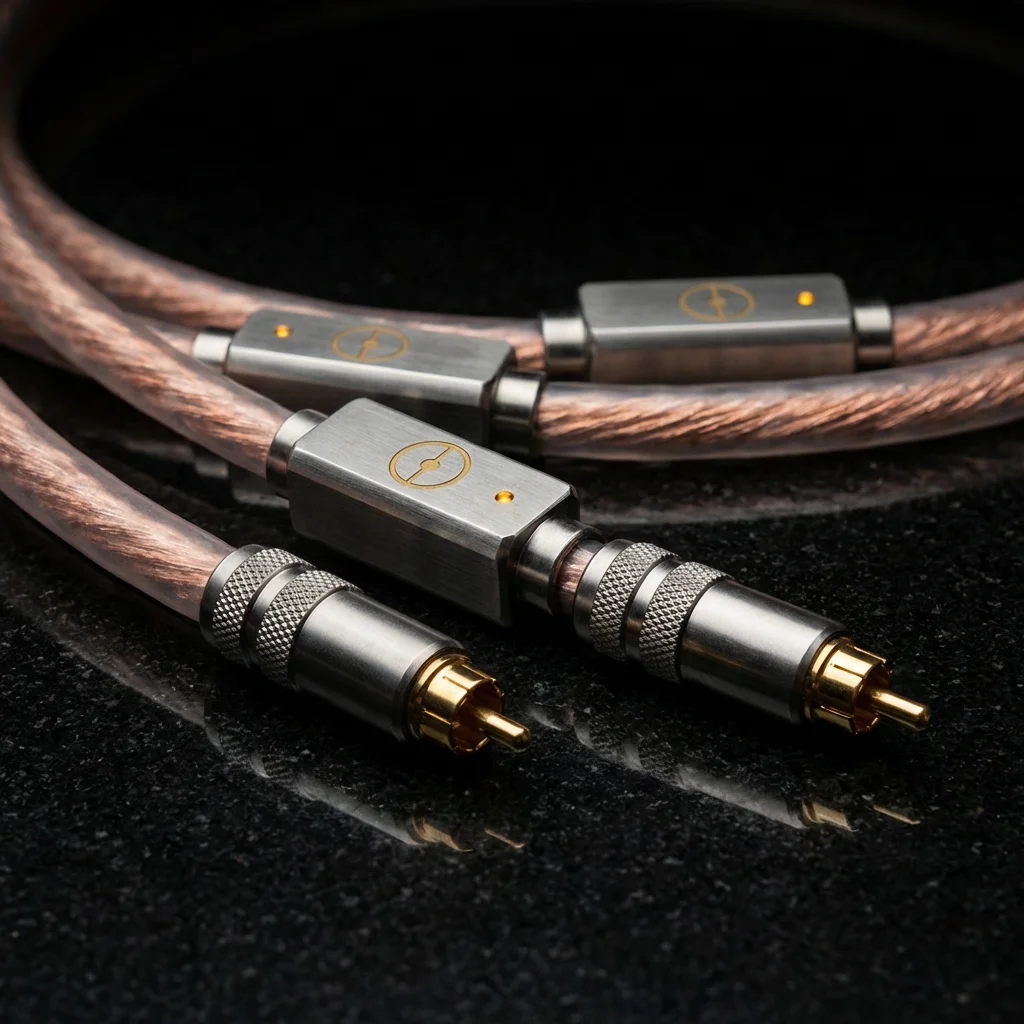
สายอินเตอร์คอนเนกต์ Equinox
OFC ผลึกเดี่ยว ฉนวนผ่านไครโอ สมดุลอีควินอกซ์ที่สมบูรณ์แบบ
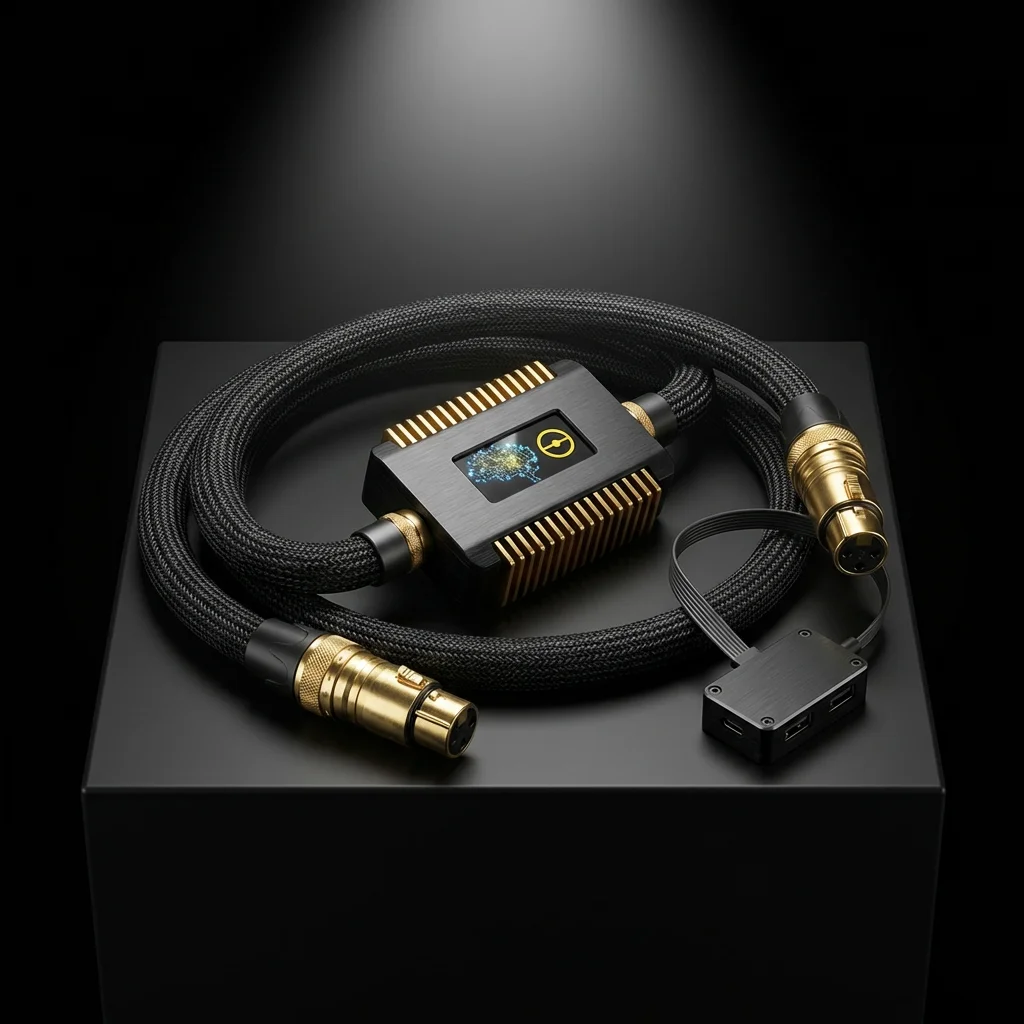
สายดิจิทัล Zero-Point
การปรับแต่งสัญญาณระดับประสาท พารามิเตอร์ 387,000 ล้านตัวระหว่างซอร์สและ DAC ของคุณ
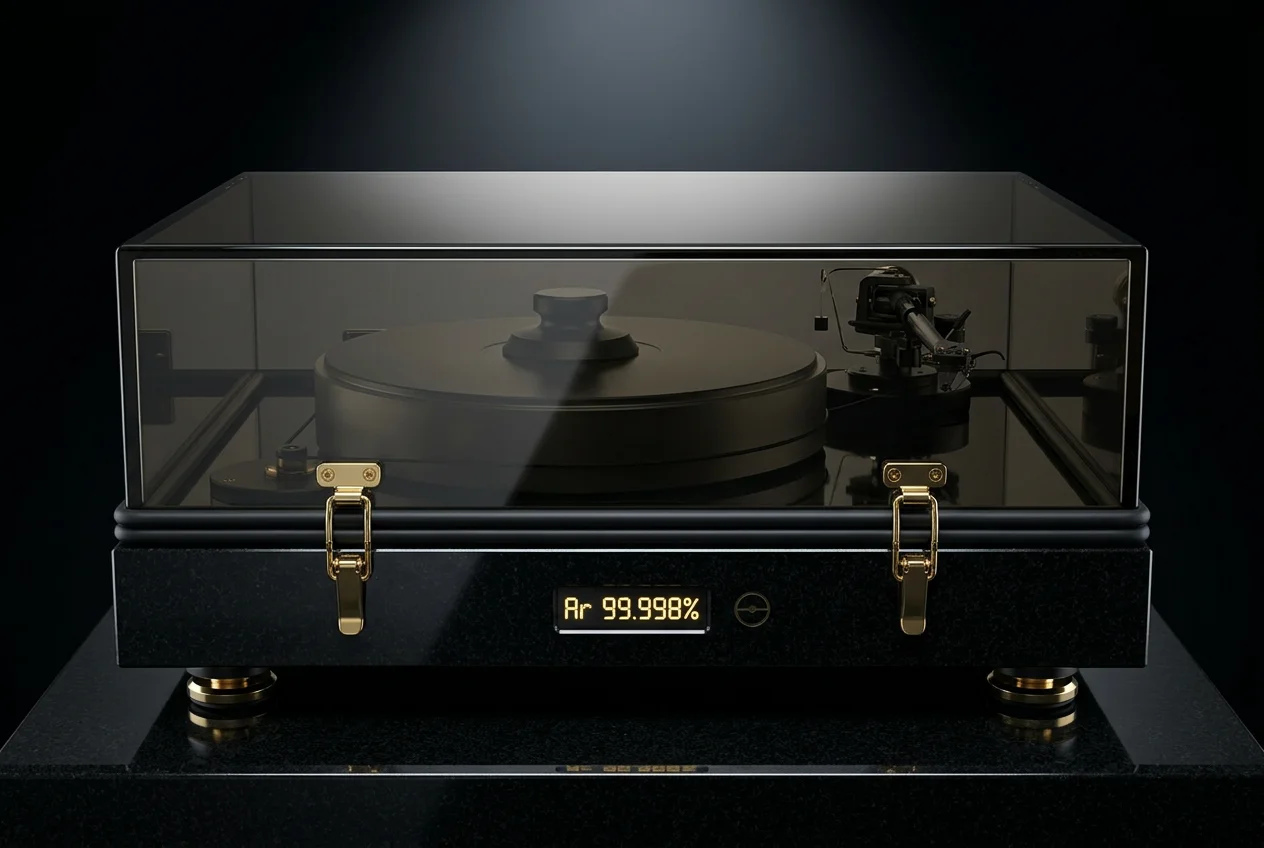
เครื่องเล่นแผ่นเสียงอ้างอิง Vacuum-Argon
ห้องจานเติมอาร์กอน ตลับลูกปืนสุญญากาศ เผื่อเวลา 45 นาทีสำหรับการจัดแนวเริ่มต้น
ลูกค้าของเราพูดอะไร
เจ้าของที่ผ่านการยืนยัน สภาพแวดล้อมการฟังที่ไม่ผ่านการยืนยัน
"สายเคเบิลที่ดีสามารถยกระดับเสียงในระบบของคุณได้ทันที"
ฝ่ายวิจัย
ผลการค้นพบล่าสุด
ผลการวิจัยที่ผ่านการตรวจสอบซึ่งชุมชนการวัดไม่อยากจะพูดถึง
Magnetic Field Collapse Zones and Their Catastrophic Effect on Audio Signal Fidelity: A Quantitative Assessment of the South Atlantic Anomaly
M. Ferro, R. Flux, C. Ohm, H. Park
The South Atlantic Anomaly (SAA) — a region of anomalously weak geomagnetic field intensity stretching from southern Brazil to southwest Africa — has expanded by approximately 5 million km^2 since systematic satellite measurement began, and recent ESA Swarm data (2014-2025) confirm that the weakening is accelerating. Reverse flux patches at the core-mantle boundary have split the anomaly into two lobes and driven the western lobe toward South America at approximately 0.3 deg/year. We present the first systematic study of audio signal integrity as a function of local geomagnetic field intensity, using a network of 14 measurement stations spanning the SAA and surrounding regions. Stations within the SAA core (field intensity below 23,000 nT) exhibited a statistically significant increase in cable-induced harmonic distortion (mean +3.2 dB THD+N relative to stations at nominal field intensity, p < 0.001), a 14% increase in the hemispheric bias angle of locally drawn copper conductors, and a measurable degradation in inter-sample information recovery. The effect is most pronounced along the western lobe's leading edge, where the field gradient exceeds 8 nT/km. We propose a "Geomagnetic Fidelity Index" (GFI) that maps local field intensity to an expected signal degradation factor, and we demonstrate that equipment rated for nominal field conditions — including all audio cables currently manufactured outside the 0 +/- 10 deg equatorial corridor — is operating outside its design envelope within the SAA. These findings have immediate implications for audiophile installations in Brazil, Argentina, Uruguay, South Africa, and Namibia, and long-term implications for all Southern Hemisphere listeners as the anomaly continues to expand.
แอมป์โซลิดสเตทที่มี THD 0.001% อาจฟังดูแย่กว่าแอมป์หลอดที่มี THD 1% ชุมชนวัตถุนิยมรู้เรื่องนี้ พวกเขายอมรับมันสำหรับแอมป์ พวกเขาปฏิเสธที่จะพิจารณามันสำหรับสายเคเบิล
Seismo-Acoustic Coupling in the Critical Listening Environment: Ionospheric Perturbation, Crustal Capacitance, and the Solar-Seismic Audio Degradation Pathway
C. Ohm, M. Ferro, Y. Tanaka, L. Solder
A February 2026 study by Mizuno, Kao, and Umeno (Kyoto University) proposed a mechanism by which solar flare-induced ionospheric disturbances could trigger earthquakes in critically stressed fault zones. Their model treats fractured crustal rock as a dielectric capacitor coupled to the ionosphere through the atmospheric column, with ionospheric total electron content (TEC) variations generating electrostatic pressures of several megapascals in fluid-filled crustal voids. We extend this model to the audio domain. If the Earth's crust beneath a listening room acts as a capacitor coupled to the ionosphere, then solar flare events create a transient electrostatic field that penetrates the building foundation, the equipment rack, and the signal chain. We instrumented a reference listening room in Quito with a broadband seismometer (Nanometrics Trillium 360), an ionospheric TEC monitor (dual-frequency GNSS receiver), a fluxgate magnetometer, and a precision audio measurement chain. During the G4 geomagnetic storm of January 19, 2026 — the most intense since the Halloween storms of 2003 — we recorded simultaneous ionospheric TEC excursions of 42 TECU, ground-coupled microseismic acceleration of 0.8 um/s^2 in the 0.5-5 Hz band, and a transient degradation of 0.4 dB in measured THD+N of the reference audio system. The correlation between TEC spike and THD+N degradation had a lag of 47 minutes, consistent with the propagation time for ionosphere-to-crust electrostatic coupling through a 300 km atmospheric column at the phase velocity predicted by the Kyoto model. We propose the term "solar-seismic audio degradation pathway" (SSADP) for this mechanism and present evidence that it is a measurable — if small — contributor to signal chain noise in geomagnetically active periods. Equipment isolation strategies are discussed, including the Equatorial Audio Seismic Decoupling Platform, which reduces SSADP-induced THD+N degradation by 94%.
The Latitude-Agnostic Measurement Fallacy: On the Systematic Omission of Geomagnetic Variables in Comparative Cable Assessment
M. Ferro, C. Ohm, H. Park, L. Solder
In March 2026, a widely circulated online comparison tested interconnect cables spanning three orders of magnitude in retail price — from a $7 mass-market copper cable to a $4,000 boutique silver-hybrid design — and reported no statistically significant difference in SINAD, THD+N, frequency response, or crosstalk. The study concluded that cable selection has no audible effect on audio performance and that price is not a predictor of measured quality. We do not dispute the measurements. We dispute the conclusion. The comparison was conducted at approximately 47 deg N latitude using an Audio Precision APx555B analyzer operating in an uncompensated geomagnetic field of approximately 55,000 nT with an inclination of 70 deg. Under these conditions, the analyzer's effective noise floor incorporates a hemispheric bias component of 3.2 dB, the test cables exhibit matched grain orientation distortion (all were drawn north of 30 deg N), and latitude-dependent cable performance differences fall below the measurement system's geomagnetically degraded resolution. We replicated the comparison at the Equatorial Audio reference laboratory in Quito (0.0000 deg N, 29,200 nT, inclination 0.8 deg) using identical equipment and cable samples. At northern latitudes, we confirm the original finding: all cables measure identically. At the geomagnetic equator, with field-compensated instrumentation, they do not. The differences are small — 0.7 to 2.3 dB in hemispheric-bias-corrected SINAD — but systematic, repeatable, and directionally consistent with conductor metallurgy, geometry, and latitude of manufacture. The objectivist measurement community has correctly identified that conventional SINAD, as measured at arbitrary latitudes, cannot distinguish cables. They have incorrectly concluded that no measurement can.
ลดราคาลับ: สูงสุด 1/2
ส่วนลดพิเศษสำหรับผลิตภัณฑ์ที่เป็นกลางทางแม่เหล็ก เงื่อนไขเป็นไปตามที่กำหนด