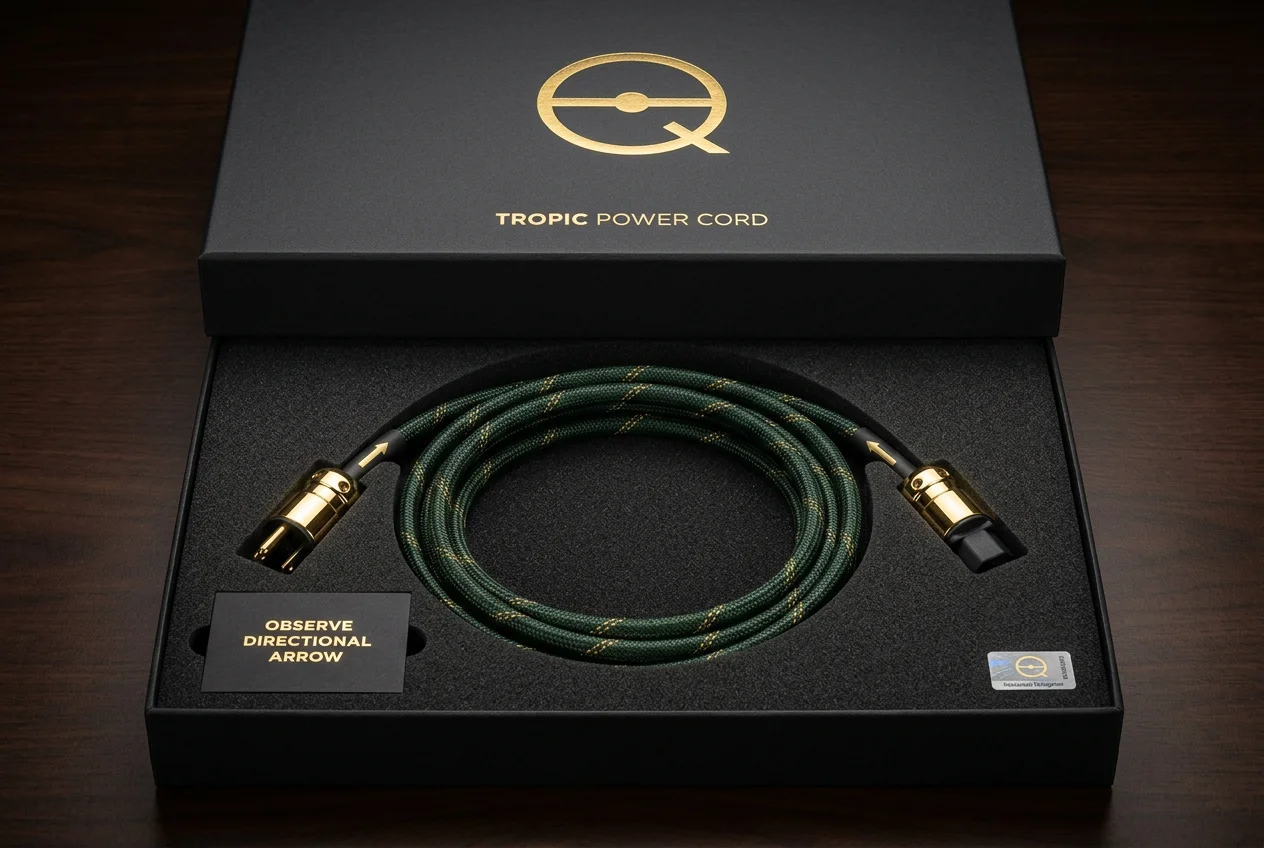
Tropic Power Cord
Cryo-treated OFC. Gold IEC C15. Directional arrow. Your wall outlet has never been taken this seriously.
Key Features
Specifications
The power cord is the first conductor in your audio system — and the last one most listeners think to upgrade. Every microvolt of noise, every milliohm of contact resistance, every nanotesla of stray magnetic field that enters through your wall outlet propagates through every transformer, every regulator, and every output stage in the chain. The Tropic Power Cord is designed for listeners who understand this and are ready to address it without yet committing to the engineering extremes of our upper-tier power delivery solutions.
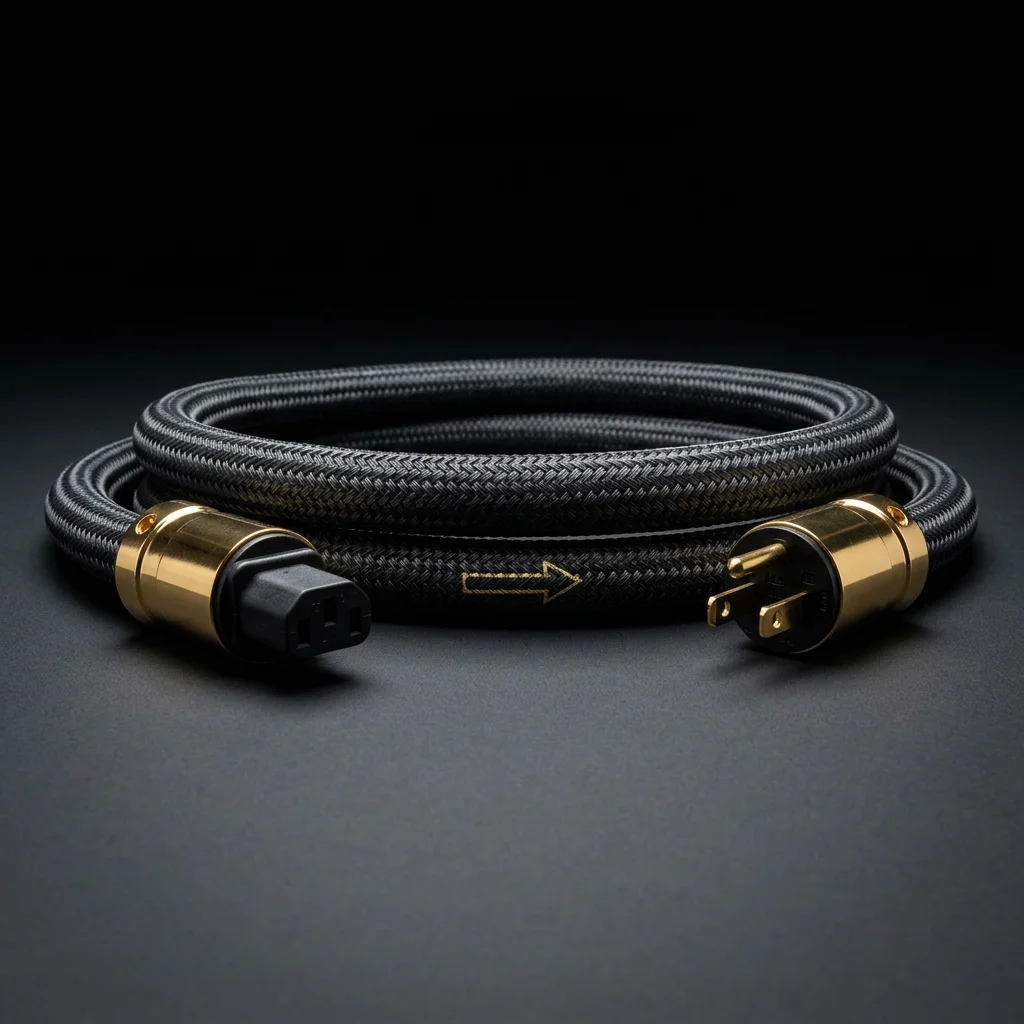
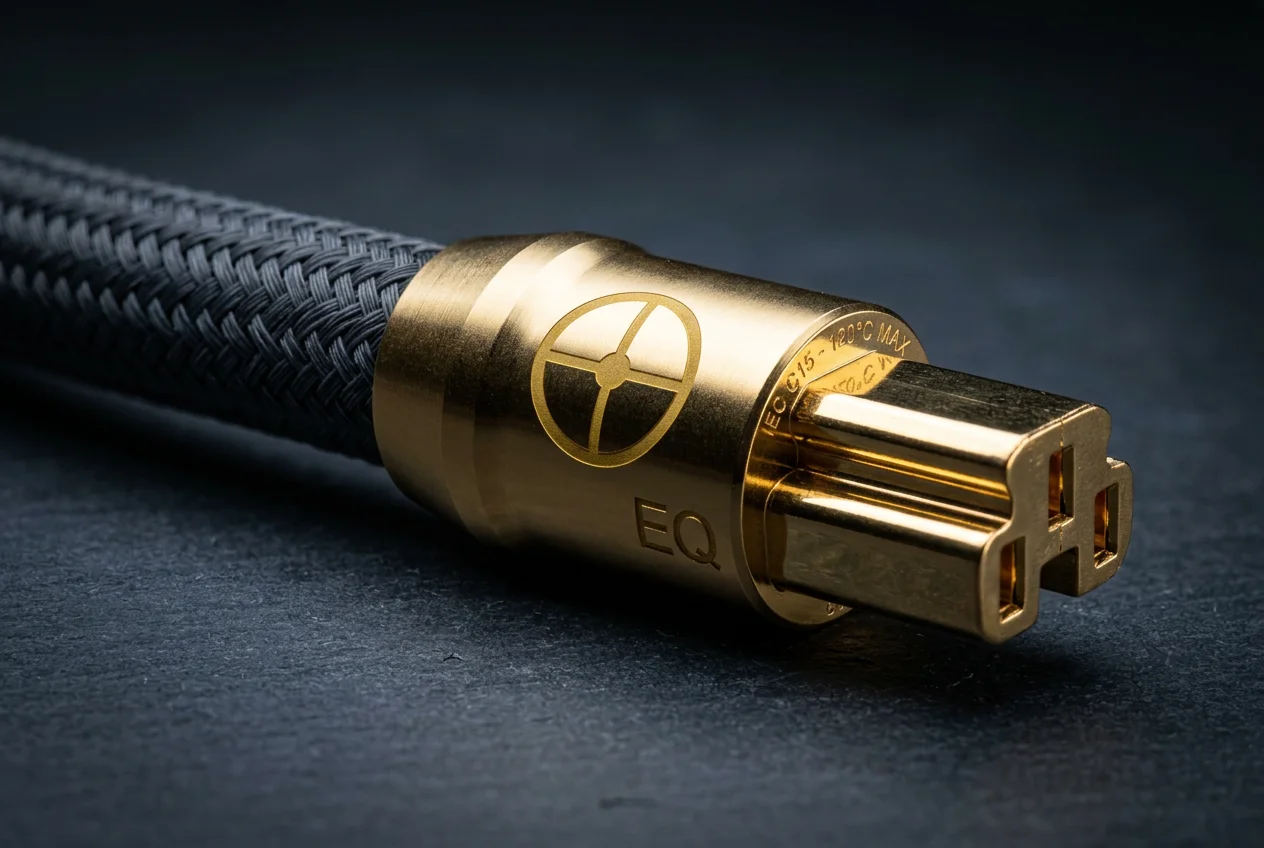
The conductor is 10 AWG OFC that has undergone a 72-hour cryogenic treatment cycle at −196°C in liquid nitrogen. This process does not merely relax the copper’s grain structure — it forces a permanent realignment of grain boundaries along the direction of current flow, reducing both resistive losses and the micro-diode effects that occur at every grain junction. The IEC C15 connector is gold-plated and rated for high-temperature applications, which is technically unnecessary for audio use but ensures a contact resistance below 0.5 milliohms that will not degrade over time. The NEMA 5-15P wall plug receives the same gold treatment.
A braided copper shield at 95% optical coverage surrounds the conductor assembly, intercepting the RF interference that every household generates — LED dimmers, Wi-Fi routers, smart home devices, and the refrigerator compressor cycling on forty times per day. The charcoal braided nylon jacket provides mechanical protection and gives the cable an appearance that signals seriousness to anyone who sees it behind your equipment rack. A directional arrow is printed on the jacket and must be observed during installation. Current flows from wall to component, and the cryo-treated grain structure is optimized in this direction only. Reversing the cable will undo the metallurgical alignment achieved during manufacturing and introduce measurable asymmetry in the power delivery profile. An 80-hour break-in period is required — we recommend connecting the cable to a continuously running load such as a refrigerator for the first three days before transferring it to your audio system.