HoS QotlhwI' — jul beQ SovwI'
'eSorghwI' HoS QotlhwI'. jul beQ lughmeH jang — jan pIHqu'.
Doch nIv patlh
QeD De' mach
Solar flares disrupt the geo'ul He. The geo'ul He influences the behavior of every transformer, every HoS nob, and every DevwI' in your QoQ pat. Joj the moment a coronal mass ejection reaches Earth's magnetosphere and the moment its effects dissipate, your HoS nob is operating in a fundamentally different 'ul patlh Hutlh Dat — one that no conventional power conditioner is nabta' to handle.
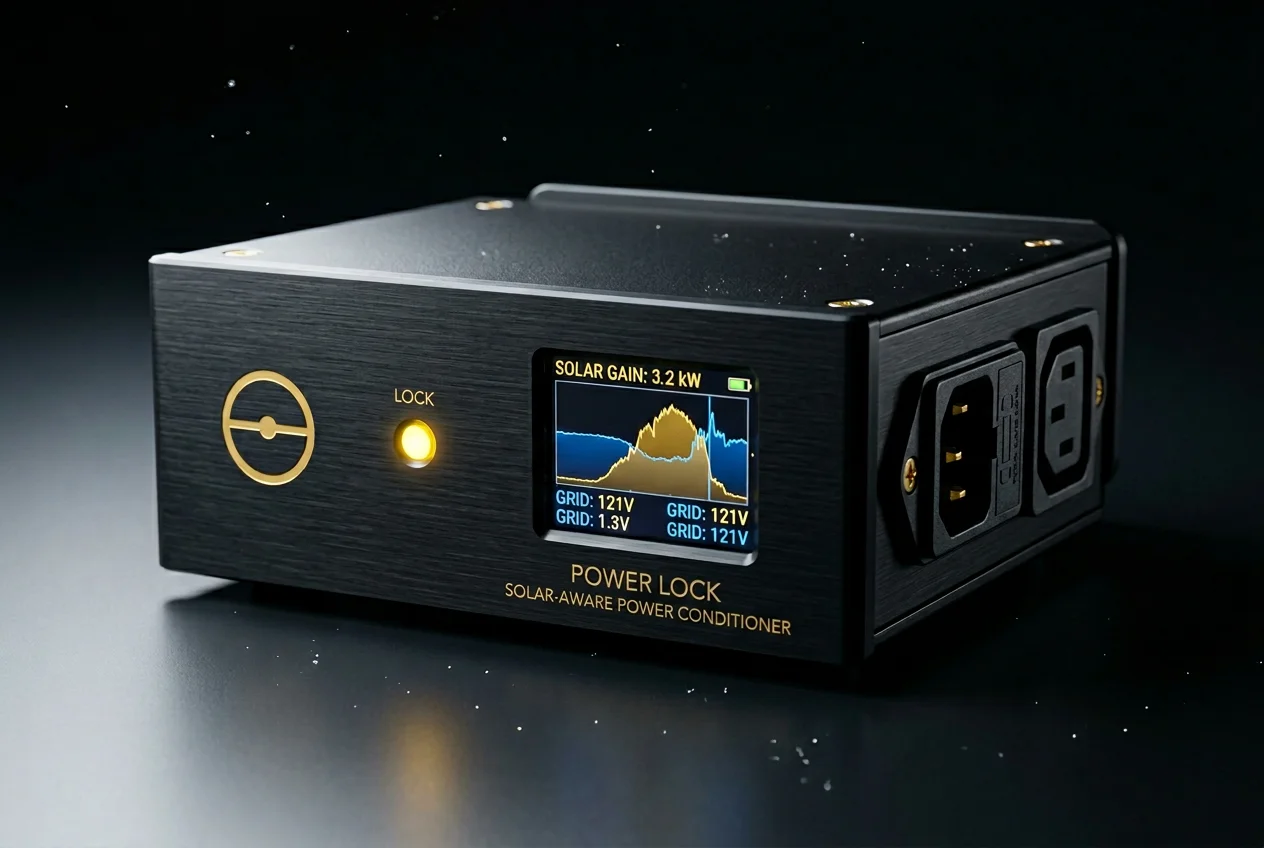
The Power Lock monitors real-time solar weather data from NOAA's Space Weather Prediction Center and adjusts its HoS ngeH profile pa'logh geomagnetically induced currents reach your equipment. A proprietary 'ul He lock pat — an array of neodymium N52 'ul naghmey positioned around the internal transformer core — dynamically modulates the transformer's coupling coefficient to compensate for external 'ul He variations. QaStaHvIS a Kp7 or greater geomagnetic storm, the Power Lock can apply up to 4.7 nanotesla of compensatory 'ul He bias, maintaining HoS regulation bIngDaq specification even as the grid itself fluctuates.