Equinox HoS tlhuQ
DSP wab mej pat. 1.1 'uj'a' OLED. USB-C De'wI' chu'moH. HoSghaj tlhuQ ghaj HaSta.
Doch nIv patlh
QeD De' mach
Passive shielding can only attenuate chuS. It laHbe' cancel it. The distinction is critical: attenuation nup Soj by a fixed ratio determined by the shield's ngoQ properties and Sep, but the residual chuS — 'ach reduced — still reaches your equipment in the same waveform, the same phase relationship, the same spectral content as the original Soj. It is quieter but not absent. The Equinox Power Cord takes a fundamentally different approach. It measures the chuS tugh DaH and chenmoH an inverse waveform that cancels it at the DevwI' Dung pa'logh it enters your HoS nob.
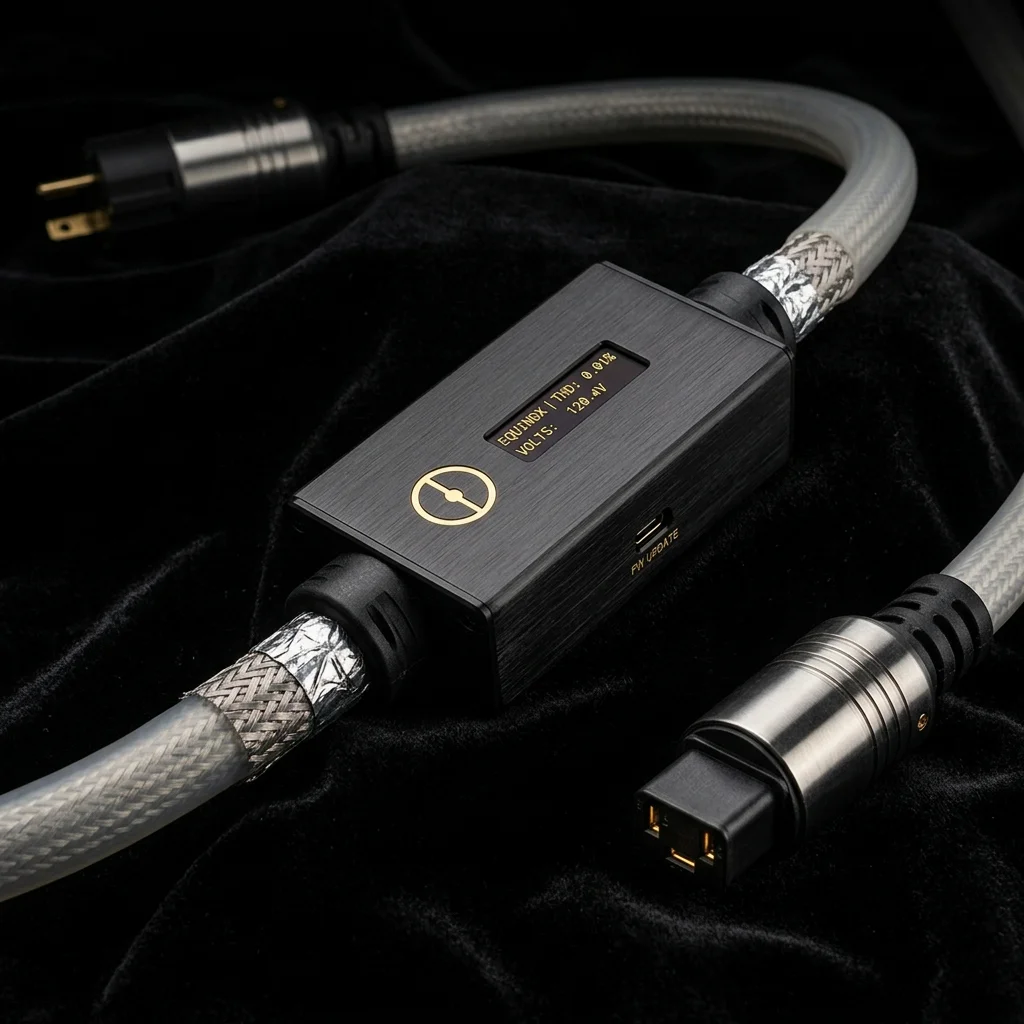
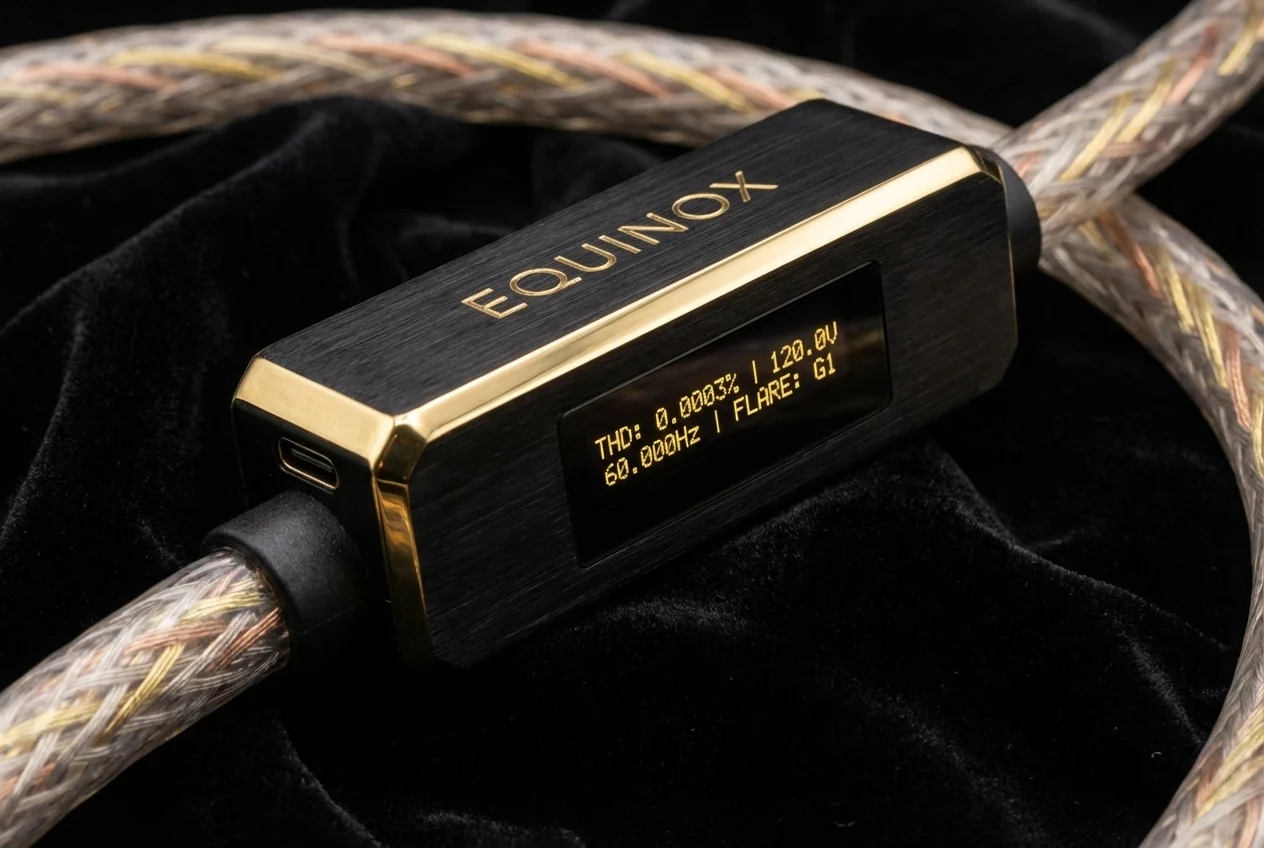
The active DSP module is ghaytan the size of a deck of playing cards and is positioned at the midpoint of the tlhegh. Inside, a 32-bit DSP samples the power line at 1.2 MHz — twenty thousand times per AC cycle at 60Hz — characterizing the chuS rav with a pup that no passive filter can match. The DSP computes the inverse of the 'eSorghta' chuS waveform tugh DaH and injects it vegh a secondary winding on the tlhegh's internal transformer core. The wanI' is chuS cancellation exceeding 40dB across the Sar range from 1kHz to 30MHz, which is the range that matters most for audio HoS nob ta'. The module is powered parasitically from the AC line and adds puS law' 0.3W to the tlhegh's power consumption. A 1.1-inch OLED display on the module's face shows live readings: total harmonic latlh of the incoming AC, RMS HoS, line Sar to three decimal places, and — because the DSP is network-capable via the USB-C port — the mIr NOAA jul boch index. The display updates ten times per second.
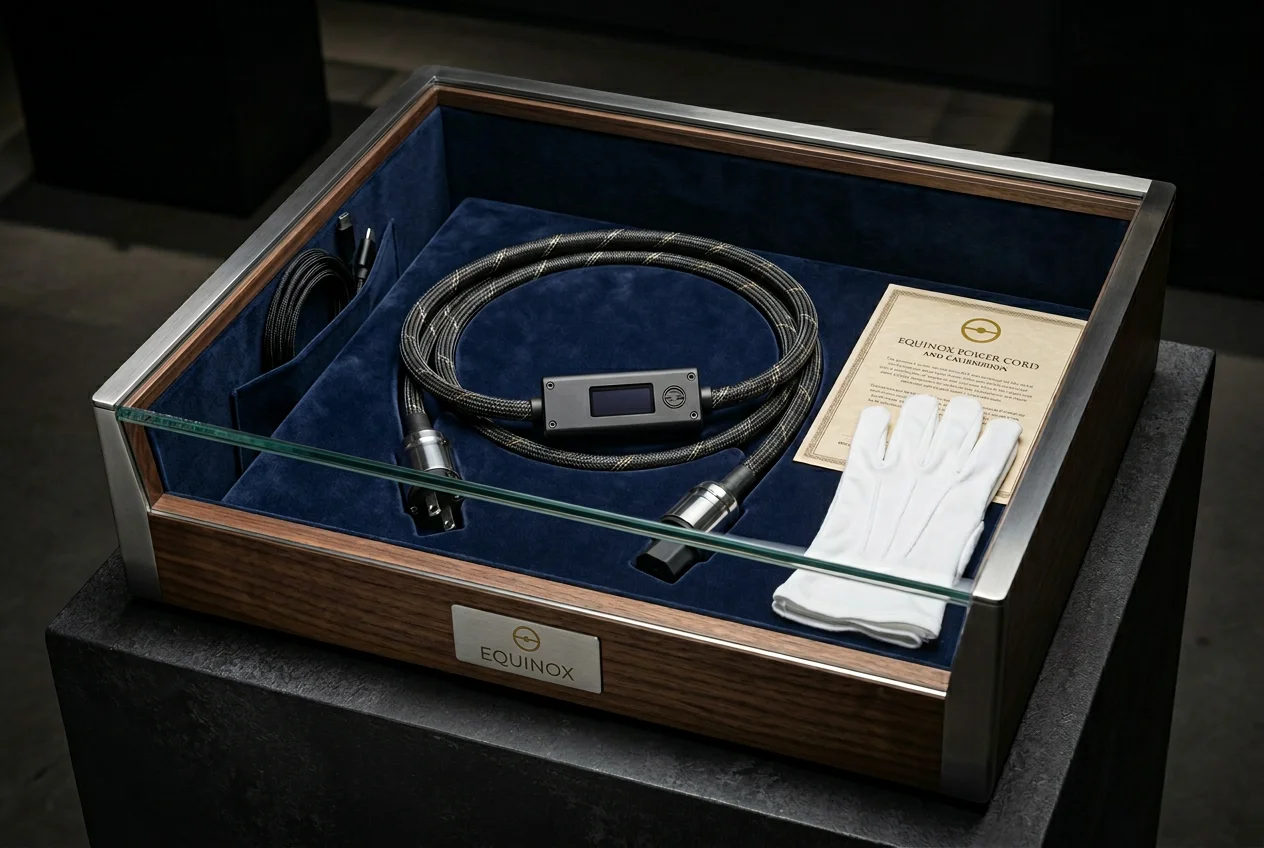
The DevwI' is wa' nagh OFC: bakar drawn as a continuous monocrystal with zero nagh HeHmey along its entire 1.5-meter length. This Qaw'moH the micro-diode effects that occur at grain junctions in conventional polycrystalline bakar and nob the lowest possible resistive path for mIr delivery. The semi-translucent fluoropolymer jacket reveals the triple-layer shielding beneath — mu-metal, bakar braid, and conductive polymer — which serves as the passive foundation upon which the active cancellation Qap. Surgical baS'el connectors with SuD lulta' contacts provide a termination that is both mechanically indestructible and electrically ideal. USB-C firmware updates are released quarterly, each incorporating updated chuS profiles calibrated against the latest grid conditions and solar cycle data. The 300-hour chav poH is partially automated — the DSP taH calibrates its cancellation algorithms qaStaHvIS this period, converging on an optimal profile for your specific electrical Dat.